Give me books, fruit, french wine and fine weather and a little music out of doors. --John Keats

Tuesday, September 27, 2011

"Angela's Ashes" by Frank McCourt

"There's nothing like a wake for having a good time." 
That one sentence, for me, sums up the tone of Frank McCourt's entire memoir: optimism, maybe even a bit of wry humor, in the face of depressing needs and desperate situations. Or perhaps it's merely the fact that I've never attended an Irish wake? Maybe they're a whole lot more fun than I can imagine. Whichever it is, this book made me think of a 1940s version of Jeannette Walls' book The Glass Castle, only a whole lot more Irish.

Angela's Ashes is the cure for anyone who thinks their life sucks. If you are reading this, you've got electricity. I'm willing to bet your clothes are relatively clean and decent, and (especially if you're an American like me) you're probably not very hungry. (Yeah, I'm talking to you! Put down the Cheetos!) In fact, Angela would say that we "don't have a notion of not having." But even in their constant state of want, there were still times the McCourt family managed to help those less fortunate, because "there are always people worse off and we can surely spare a little from what we have." It was mind-boggling enough that there were people less fortunate, but even more amazing to see the generosity of those who had so little to begin with.

I appreciated the fact that, even though his childhood was filled with hard times occasionally interrupted by harder times, McCourt doesn't seek to put his readers to shame. (I put myself to shame while reading his book, but that's not the author's fault.) He doesn't beg for sympathy or try to make his readers feel guilty for having too much or not giving enough. He's just telling it like . . . 'tis.

It's also intriguing to watch as McCourt develops his writing skills throughout his childhood. It's evident that he had an innate talent that was strong enough to survive abject poverty, and an imagination untouched by his harsh surroundings: "It's lovely to know the world can't interfere with the inside of your head." I'm not sure I agree with that, as the world seems to be messing with my head on a regular basis, but somehow McCourt made it through a much more difficult life than mine with minimal apparent damage.

Maybe I'm just a dummy, but I couldn't figure out why this book was entitled Angela's Ashes. The entire time I was reading, I was expecting Angela (the author's mother) to die, but she managed to hang on the whole way through. Oh, um, spoiler. So I've looked it up in order to enlighten you. Apparently the follow-up book, 'Tis, which was originally tacked on to the end of this book, concludes with the scattering of Angela's ashes. (Yep, that's another spoiler.) And Angela's Ashes concludes with the word 'tis. So there's a sort of symmetry there . . . although it still doesn't quite make sense to me. Shouldn't it have been the other way around?

Tuesday, September 13, 2011

"Speak" by Laurie Halse Anderson

"When people don't express themselves, they die one piece at a time. You'd be shocked at how many adults are really dead inside--walking through their days with no idea who they are, just waiting for a heart attack or cancer or a Mack truck to come along and finish the job. It's the saddest thing I know."

I'm about to express myself. Madonna, eat your heart out!

I watched the movie version of this story before I even realized it was a book adaptation, but then I started hearing all kinds of good things about the book from other bloggers. I have been known to be a tad, shall we say, disparaging towards YA fiction. But as impressed as I was with the movie, I figured surely the source material couldn't be all bad. And when I saw this in the book section at Target (I was hardly even looking at the books, I swear!) it just sort of leaped off the shelf and into my hands, whispering, "Take me home with you." So I did. (Don't worry, I paid for it first.)

On the surface, Speak is kind of like a cross between the movie Heathers (only with less of its midnight black and razor sharp humor, and with fewer Heathers) and The Perks of Being a Wallflower, with the Angst-Causing Teen Issues whittled down from every single possible traumatic life experience to one or two. In case it's unclear to you, that's not a bad combination. Where Heathers may be a bit silly and unlikely (though still awesome!), Speak is steeped in reality. Melinda Sordino could be any girl in any high school in any state in America. That is, any girl with a Big Secret she finds so shameful that she doesn't feel like she can talk about it to anyone.

At just under 200 pages, of course I zipped through Speak, though the excellent writing and absorbing plot didn't hurt a bit in that respect. The book didn't quite reach critical mass for me, but I bet if I hadn't already learned Melinda's Big Secret while watching the movie, I would have found myself the prisoner of an inexorable Chain Reaction of Curiosity, rendering me incapable of putting the book down. You know how I feel about secrets! They drive me bonkers, and I can not rest until I have ferreted out every detail.

I won't tell you what Melinda's Big Secret was, on the off chance that this will leave you able to enter into your own Chain Reaction of Curiosity as you read, but I will mention that (as a result of the secret) Melinda sinks into a depression that consumes her for most of her freshman year of high school. That's not to say that the book itself is depressing. It can be heartwrenching, but it's not a complete downer. Sometimes it's even funny (though, as I mentioned, not Heathers-funny) in a wry and subdued way. And Anderson nails the teenage voice.

Although I am labeling Speak as "not suitable for children . . . or my mom," I do think my mother could probably handle this one. As could the average high school student. I mainly have my 8-year-old daughter in mind when applying this label. She's not ready for it yet.

Wednesday, September 7, 2011

"Dust and Shadow: An Account of the Ripper Killings by Dr. John H. Watson" by Lyndsay Faye

Remember when I told you I'd bought this book? Not surprisingly for a story that stirs together Sherlock Holmes and Jack the Ripper, it managed to leapfrog itself over my insane TBR stack. (Which, by the way, is no longer a stack! My books TBR are now shelved and acting civilized! But I know better.) Dust and Shadow landed in the Top Priority Spot due to high hopes and expectations.

Despite my eager drooling, before I began reading I worried just a bit that the author might have bastardized the immortal duo of Holmes and Watson the way this movie did. (I still haven't recovered from that.) But I'm happy to report I shouldn't have bitten my nails over it. I was quite impressed by the way that Faye managed to replicate the tone and characters of Conan Doyle's stories.

Of course, you should take my pronouncement with a grain of salt (or perhaps a pinch of tobacco from the toe of a Persian slipper). I am no Sherlockian scholar. But (though it's been a while) I have read a few Holmes stories, and this one seemed to fall right in line with my memory of the original Sherlock.

I'm sure it's no shock that my astronomical expectations weren't quite satisfied. I was hoping for greatness and didn't find it, but I can handle the fact that what I got was, instead, a solidly good book. In fact, it rated high on my Agatha Christie scale. (Finally!) However, I must admit I anticipated a slightly greater degree of cleverness from Holmes. He wasn't stupid, of course, but he didn't blow my mind, either. So, nine points out of ten for conforming to the original standard, five out of ten for originality in resolution of the mystery, and fifty-three out of ten for such an enticing story idea!

Wednesday, August 17, 2011

"Gone" by Michael Grant

Here's a book that would make a great movie. That's not necessarily an insult, but it's not breathless approval, either. It means Gone has an intriguing premise and plenty of action, but reading it doesn't require deep thought (or even much shallow thought) and it doesn't have much in the way of character development.

This is the idea behind the book: One normal November day in Perdido Beach, California, students at the local school are shocked to see everyone over the age of fourteen disappear in an instant. Gone is the story of how a town full of children deals with a new life of sudden anarchy. Oh, and matters are complicated when some of the kids discover that they have superpowers . . .

So. Nice story idea, but I found myself a bit indifferent to the result. It didn't help that this book never reached critical mass. In fact, I put it down last night with only twenty pages to go, if that tells you anything. But don't start thinking I'm trying to say this book was horrible, because it wasn't. I didn't have to choke it down, and it wasn't boring. I bet those who love YA and dystopian fiction would find this a good one, but I suppose it's just not my thing. I would describe it as fun and superficial. Not that I have anything against fun! I like fun. But while I'm OK with movies that are pure fun, I appreciate a bit more meat when I'm choosing books.

I have a feeling lots of rabid fans (and maybe even the rest of the girls in my book club) will be shocked to hear this, but I'm only minimally interested in what happens throughout the rest of the series. I was curious enough that I read a brief outline of the plots, but not interested enough to buy (or even borrow) the subsequent books and actually *read* them. There are far too many other books that sound more interesting to me. I'll leave the remainder of this series to people who are younger than I am.

Wednesday, July 27, 2011

How I happen to have purchased Even More Books

Each of my kids recently lucked into a tidy sum of money. Five whole dollars! I offered them a trip to Books-A-Million, and promised I would make up the difference if they each chose one book to buy. A much better idea than buying $5 toys, don't you think?

I hadn't planned to buy any books for myself (for goodness' sake, I have an embarrassing number of unread books on my shelves already, and I am trying to curb my spending) but then I realized I hadn't purchased my August book club selection yet. And of course book club books are a necessity, so they don't count when there's spending-curbing going on.

When I found a copy of Gone (Charity, it's way fatter than I expected it to be!) it had one of these lovely stickers on it:


So of course I HAD to at least look for two more books with the same sticker. I mean, FREE BOOK! Need I say more?

So. I'd gone from "buying no books for myself" to "looking for more." You know me. The first place I headed was the bargain aisle. Yes, I know they never put the aforementioned stickers on the bargain books. But they do put these stickers on them:


You've got to admit, if you're anything like me, that makes a book awfully tempting. And, surprise surprise, something caught my eye. It was this title:

Which reminded me of this book:


Although, now that I look at it again, I'm not sure why it should have. The only real similarity is that the title is slanted at the same approximate angle. But still! The book had caught my eye.

And what should appear directly below the eye-catching title? These words: An Account of the Ripper Killings by Dr. John H. Watson. Oooh! The Ripper Killings? As in Jack the Ripper? As in one of history's most intriguing mysteries? AND . . . by the Dr. Watson? Of Holmes and Watson fame? It just kept getting better and better. I HAD TO HAVE THIS BOOK.

My bookworm daughter didn't understand. Why was I getting two books for myself when she was getting only one? (Never mind that my two together cost less than her one.) My son told me I shouldn't judge a book by its cover. I said, "I didn't! I judged it by the title and the blurb!" He gave me an odd look, then reminded me, "Those are on the cover." Oops. Busted by an eleven-year-old. It's OK, though, because I quit after two. I know my limits.

I just now realized I did not follow through with my usual book-buying procedure. I didn't crack Dust and Shadow open to a random page to make sure the writing doesn't suck. And now that I've gotten the book home, I'm almost afraid to look. I'd rather hang on to the promise of an amazing story in hopes that I won't be disappointed. Along with the hope that I won't have to make my kids eat their books for dinner any time soon, or burn them for fuel next winter. (Don't worry, it's really not that bad. Yet. At least not until my next trip to Books-A-Million.)

P.S. My youngest, blissfully oblivious to my unfair double purchase and cover-judging, had this to say at the bookstore: "I want to stay here for the rest of my life." Me too, baby! Do you think they would let us?

Thursday, June 2, 2011

"The Man Who Was Thursday: A Nightmare" by G. K. Chesterton

Curses! I read this book weeks ago and I'm just now blogging about it. That's never good. I remember that I enjoyed reading it, but that doesn't help much. I remember thinking it was a (nearly) perfect story for me, which is always nice. (It was only nearly perfect because somewhere about the middle it devolved into a surreal chase scene, which kind of lost my interest, but it picked up again after that.) I remember I was fascinated by the utter strangeness of it.

But beyond that my memory gets a bit sketchy. My vague recollection is that this is the story of two poets: Lucian Gregory, an anarchist hiding in plain sight; and Gabriel Syme, recruited by Scotland Yard to pose as an anarchist and infiltrate the secretive (and oxymoronic) Central Anarchist Council under the code name Thursday.

The story alone is quite entertaining, but Chesterton adds some interesting statements about the nature of the apparent chaos of the universe. Contrary to what anarchists and existentialists would have us believe, Chesterton makes the point that mere chance doesn't have any real bearing on our lives--that all life is dictated by divinely inspired order.

And that's as far as my memory goes (without delving into spoilers, anyway). Not much of a review, I know, but it's the best a literary amnesiac can do. At least I can leave you with a couple of quotes that struck me by their peculiar expressiveness:

"The young man with the long, auburn hair and the impudent face--that young man was not really a poet; but surely he was a poem."

"This particular evening, if it is remembered for nothing else, will be remembered in that place for its strange sunset. It looked like the end of the world."

Monday, May 30, 2011

"Perfume: The Story of a Murderer" by Patrick Süskind


Jean-Baptiste Grenouille begins life as an unwanted baby boy in 18th century Paris. As he grows, he doesn't develop a conscience or an ethical set of values, but he does have the most amazingly well-developed sense of smell, allowing him to parse out thousands of individual scents. Lacking a moral compass along with any sort of body odor, Grenouille's ambition to create the ultimate perfume drives him to the murder of sweet innocent virgins.

Am I the only person in the world who thought this book was just a little bit ridiculous? I could handle the unscented boy with the most sensitive and talented olfactory nerves in the world, but there was a bit too much implausibility heaped on top of that. By the time I got to the (um, spoiler?) scent-induced town-wide orgy, I just had to laugh at how silly it all was. Maybe that's because I've never had the chance to participate in a town-wide orgy myself, scent-induced or no. But maybe that's because the concept is a bit too far-fetched.

In addition to the aforementioned need to suspend more disbelief than I found possible, there was not much in the way of character development. And I just have to mention that adult ticks have eight legs, not six. (Don't most people know this?) But I couldn't fault the writing, and the story itself was interesting (without ever reaching critical mass) and certainly unique.

The best part of this book may be the inscription I found in my used copy. Some poor sap wrote (among other things): "Behind the fascinating murder story is the notion that we are attracted to people not for their physical attributes or for their deep intellect, but for their 'fragrance' which we perceive unconsciously. Maybe I'm odd, but I find this concept somewhat sexy." And then the girl he gave it to sold the book. Guess she didn't like the way he smelled.

Thursday, May 26, 2011

"The Giver" by Lois Lowry

The kids and I read The Giver as a bedtime story over the past few weeks. My oldest child couldn't stand the slow pace and read ahead, finishing the book weeks ago. I love it when that happens! Though it very rarely does. The only problem with that is, as with Holes by Louis Sachar, sometimes I don't end up finishing the book myself. But I finished this one!

The Giver is the story of eleven-year-old Jonas, who lives in a perfect community pervaded by Sameness. Everyone is equal, there is no pain, each person's job is chosen for them--even family members are put together through a selection process!--and there is no music, no color, and no emotion. Jonas is selected to be the community's Receiver of Memory, and the more he learns, the more he realizes that his way of life is far from flawless; it's more dystopian than utopian.

The story left me with a lot of unanswered questions. We never learn how the community came to be, its location (was it on Earth?), how extensive it was, why it was made, who created the rules, how they controlled the weather, whether Elsewhere really existed. Though I wish the book had explained these things, I must admit the story is full and complete even without further elucidation.

Except for the end of the book, which I want to talk about. I will try to be as un-spoilery as possible, but it's going to be difficult, so you may want to skip this paragraph if you plan to read the book. I won't say exactly what happened at the end, but I will say that it is somewhat ambiguous. I asked my kids what they thought had happened. My oldest took it at face value: Jonas reached his destination. Bookworm Child was ambivalent: maybe Jonas reached Elsewhere, or maybe he had gone in a circle and was back at his own community. Neither of them thought what had crossed my mind, though, which was the story of The Little Match Girl.

Tuesday, May 24, 2011

"I have just the thing for you!"

As lovely as it is to have a bookworm for a child, it can be a bit frustrating when said child is both a voracious and a very picky reader. The "I don't know what I want to read" dilemma is a problem I love to solve, except when everything that I suggest is rejected.

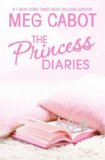
Last night at bedtime, when the unending What To Read whine started up again, I was thrilled to be able to tell Bookworm Child, "I have just the thing for you!" I pulled a cute pink book out of the middle of my TBR pile and handed it to her: The Princess Diaries by Meg Cabot. I could tell by the gleam in her eye that she was immediately optimistic about this one. She ambled obediently off to bed, new treasure in her hands.

Bookworm Child got up before her alarm went off this morning and came to find me, informing me that she was almost finished with her book. My first question: "Did you SLEEP last night?" With a wry grin she assured me that she had. Of course, I was glad she'd enjoyed the book, but that also meant my book selection success was far too short-lived.

I tried for a longer one this time: I Capture the Castle by Dodie Smith. I've heard wonderful things about it, though I haven't yet had a chance to read it myself. But no dice. Maybe she'll enjoy it more in a few years.

Meanwhile, BC is busy with the next book in Cabot's series, soon to be followed by #3 and #4. AND I have two other books waiting in the wings for her:

The Penderwicks at Point Mouette by Jeanne Birdsall. We've all read the first two books in the series. They're sweet and timeless stories, though I think I've always been more enthralled by the covers than by what's inside the book. This new cover is no exception.

And, yes, yet another book I chose because of its cover: Horton Halfpott by Tom Angleberger. Well, it was a combination of the cover and the ridiculously long subtitle: The Fiendish Mystery of Smugwick Manor or The Loosening of M'Lady Luggertuck's Corset. Who could resist? Not me, anyway.

Monday, May 23, 2011

"My Name is Memory" by Ann Brashares

I'm going to have to be more careful about what I put on my wish list. This book screams
I WANT TO BE TWILIGHT!!
(I can already picture the movie version. Alex Pettyfer will star.) Not only do I dislike books that scream at me--a whisper is much nicer--but Twilight? What a thing to aspire to. Although I suppose it's relatively easy to understand how an author might want to emulate Stephenie Meyer in hopes of a career that follows the same trajectory as hers.

This is the story of Lucy and Daniel and their eternal looooohgve. (Sorry, I gagged on that.) These two have spent centuries of lifetimes in near misses, with Daniel (and his exceptional memory, hence the title) pursuing Lucy (a.k.a. Sophia, and sometimes Constance) through a series of reincarnations. Which, of course, never quite match up well enough for a romance, until they meet in high school in 2004 and finally Lucy isn't married to Daniel's brother, or 80 years older than he is. I guess this is the sort of book people are talking about when they refer to a "paranormal romance." Romance! Why didn't someone warn me?

I should have known this book might not be for me--the author also wrote the Sisterhood of the Traveling Pants books. But this one was supposed to be for grown-ups!  However, a book doesn't become a book for adults just by having one of your characters drink bourbon and say a few rude words. With some not-so-careful editing, this would have been yet another example of the drivel that is being published for teenagers these days.

Especially towards the end, I was ever-more-frequently telling myself THIS IS SO STUPID. And yet . . . I kept reading. I mean, I kind of feel obligated to finish my Book Club books. But I also must admit I had to find out what was going to happen. The story wasn't necessarily compelling, but it was interesting enough. And I literally gasped aloud (I probably even raised my eyebrows) when I figured out why Lucy was so uncomfortable with Daniel after he came back, so I suppose I was invested in the narrative to some extent.

If you plan to read this book, you must be warned that it ends without a resolution, leaving the story wide open for a sequel. Which, as far as I can tell, hasn't been written yet. So if that sort of thing bothers you, step away from the novel.

Thursday, May 19, 2011

"Leave Her to Heaven" by Ben Ames Williams

I first heard about this book from Lesa, who has seen the "creepy suspense film" adaptation from 1945, but hasn't read the book. She asked me to nab a copy for her if I saw it, so . . . I did! And, of course, I read it before sending it to her.

This is the story of an unbelievably possessive and manipulative young woman named Ellen Berent. She sets her sights on author Richard Harland almost as soon as she meets him, contriving to marry him in the space of two weeks. Her destructive jealousy leaves no room for relationships with other people, including Richard's younger brother or Ellen's own adopted sister. The story is suspenseful and steeped in mystery, leading the reader to guess what increasingly cold and calculating steps Ellen will take to keep Richard to herself.

From the beginning, Williams' writing reminded me of Jack London's with its no-frills, straightforward story in an outdoorsy setting (also because it kind of dragged at times); but as the story went on, it made me think of Richard Adams' The Girl in a Swing, only with Americans instead of Brits. And Richard Harland is nowhere near as fey and oblivious as Alan Desland. But Ellen is certainly a mirror image of Käthe (or Karin)--perhaps even more abominable and less plausible.

In all, it was a decent (though certainly not overwhelmingly brilliant) read. I have a feeling the movie may be better than the book.

Monday, May 16, 2011

Hey, want a free book?

Hearts and Minds is a campus novel set in a fictional all-female college at Cambridge University. Rosy Thornton has written a story centered on the conflict experienced (and caused) by St Radegund's first male Head of House, giving a glimpse into the inner workings of the college. From student protests to ethical dilemmas regarding donations, Ms Thornton paints a picture of a setting she knows well as a lecturer and Fellow at Emmanuel College, Cambridge.

I've got a copy of this book that I'd love to give away to YOU. Just leave a comment with your email address and I will choose a random winner on Sunday, May 22. It doesn't matter where you live--anyone is welcome to sign up to win.

If you're feeling extra chatty, you should also tell me about the book that was your most favorite read of the past year.